 Erin Sayer
1 min read
Fuel Prices Are Swinging. Your Margins Don't Have To.
 Erin Sayer : 3/17/26, 4:31 PM
The price of fuel has been moving hard in both directions this year. The forces driving it — supply uncertainty, trade policy, geopolitical...
Running a marina means managing payments across multiple revenue streams at once. Slip fees, fuel sales, service tickets, and ship store purchases all flow through your operation daily, and the systems you use to collect those payments directly impact your bottom line. This guide covers how modern marina management platforms help marina owners, dockmasters, and general managers streamline payment processing and maintain accurate customer data across every department.
You'll learn how to eliminate billing bottlenecks, speed up collections, and build a centralized customer record that makes daily operations smoother. We'll also cover the specific payment workflows for reservations, contracts, point of sale, and fuel dock operations, so you can identify where your current setup might be costing you time and money.
A marina operates several businesses under one roof. You collect recurring contract payments that resemble rental income, process high-volume fuel transactions at the dock, ring up retail purchases in the ship store, and bill for service work in the yard. Each of these revenue streams has a different ticket size, billing frequency, and payment method.
Standard retail payment systems are built for a single transaction type. They don't account for the seasonal swings in volume, the mix of recurring and one-time charges, or the need to attach multiple charges to a single customer account. Marina operators need systems that handle all of these patterns without forcing staff to switch between disconnected tools.
The complexity increases when you consider customer expectations. Boaters want to pay for fuel at the dock, settle their slip fees online, and view their entire account history in one place. Meeting those expectations requires a payment infrastructure that connects every department to a shared customer record.
Modern marina management platforms bring all payment workflows into a single system. Instead of running separate software for reservations, contracts, fuel, and retail, you manage everything through one interface. This approach eliminates the manual reconciliation that eats up hours at the end of each day.
When a transient boater books a slip online, the platform captures their payment information and stores it securely. That same payment method can be charged for fuel purchases, ship store transactions, or additional nights. Your staff sees a unified account history rather than hunting through multiple systems to piece together what a customer owes.
Dockwa's unified operating system connects reservations, contracts, POS, and fuel management to a central customer record. This means every transaction, whether it happens at the fuel dock or in the office, updates the same account automatically. Staff spend less time on data entry and more time serving boaters.
Slip contracts represent your most predictable revenue stream, but they're often the most labor-intensive to collect. Many marinas still process seasonal payments by manually keying credit cards or collecting checks on the first of each month. This approach costs you valuable staff time.
Recurring slip rent is a textbook case for ACH or autopay. The payment is large, predictable, and repeating. Moving seasonal contracts to automated bank transfers cuts your collection costs and frees up the front desk for other work.
Digital contracts with built-in e-signature eliminate the paper chase. Boaters receive their agreement, sign it electronically, and set up autopay in a single workflow. Insurance documents and compliance requirements attach to the same record, so you're not tracking paperwork across filing cabinets and email threads.
Automated reminders notify customers before payments process and alert your team when documents expire. Marinas using Dockwa's Captains & Contracts module report seeing significantly faster renewals and reduced days-to-cash through automatic billing and reminders.
Give your contract holders multiple ways to pay. Card-on-file works for customers who prefer credit card rewards. ACH or bank transfer offers lower fees for large seasonal payments. Custom billing schedules let you collect deposits, split payments across multiple months, or align billing with a customer's preferences.
The goal is to make payment as friction-free as possible. When customers can set up autopay during contract signing, collection rates improve and your team stops chasing overdue invoices.
Your ship store, dock office, and fuel dock all generate transactions that need to land in the same accounting system. Running separate point of sale tools for each location creates reconciliation headaches and makes it harder to understand your overall revenue picture.
A unified marina POS system handles retail purchases, fuel sales, and dockside transactions through a single platform. Staff can process payments from mobile devices at the dock or from fixed terminals in the office. Every transaction attaches to the correct customer account and syncs to your accounting software automatically.
Mobile checkout capabilities let your team meet customers where they are. When a boater fueling up doesn't have to walk to the dock office to pay, you speed up throughput and improve the customer experience.
Support for multiple payment types matters too. Your system should handle split tenders, partial payments, refunds, and digital tipping without complicated workarounds. Inventory tracking keeps your ship store stock accurate, and GL code mapping sends transactions to the right accounts in your ERP.
When your POS connects to your accounting system, transactions flow through automatically. Each sale creates a matching entry with customer details, line items, and payment information. Your bookkeeper isn't manually importing sales reports or reconciling discrepancies between systems.
Dockwa's accounting integrations with QuickBooks Online and NetSuite record individual transactions directly into your ERP. This means invoices, payments, and refunds appear in your books without manual data entry, and your inventory costs stay current if you're tracking stock.
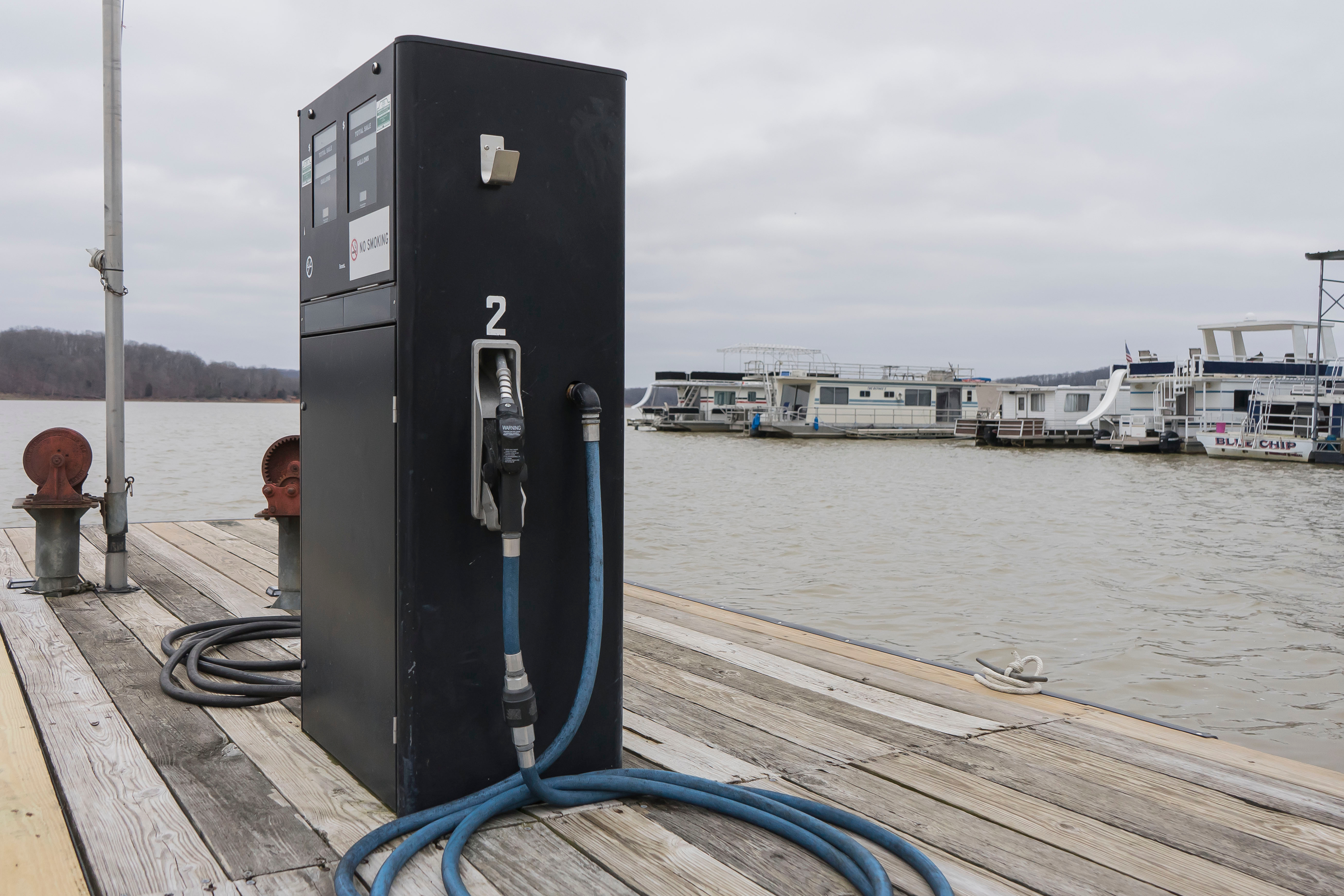
The fuel dock is often your highest-volume payment location. Boats queue up waiting for pumps, and slow checkout creates frustration and costs you throughput. Dockside payment processing eliminates the walk to the office and keeps the line moving.
Modern fuel management systems combine real-time inventory tracking with mobile payment acceptance. Your team can see tank levels, process payments at the pump, and reconcile fuel sales against inventory, all from the same platform.
With a mobile POS device, your fuel dock attendant completes the entire transaction dockside. They enter the gallons pumped, apply the correct price, calculate any applicable taxes, and process the customer's payment without leaving the fuel dock. The transaction posts to the customer's account immediately.
Dockwa's fuel management module supports dockside checkout with split tenders, digital tipping, and card-on-file payments. Marina operators report faster fuel transactions and fewer errors compared to manual pump-and-pay workflows.
Accurate fuel inventory connects to your payment data in important ways. When gallons sold matches gallons dispensed, you catch discrepancies early. Real-time tank monitoring helps you order fuel before you run low, and detailed sales records make compliance reporting straightforward.
The fuel dock often represents a significant portion of marina revenue. Connecting your fuel sales data to your overall financial picture gives you visibility into margins and helps you make informed pricing decisions.
Customer data scattered across multiple systems creates problems. Your reservations team might have one record, your contract manager another, and your ship store a third. When a boater calls with a question, staff waste time hunting for the right information.
A centralized customer database gives everyone access to the same record. Contact details, vessel information, payment history, and communication logs all live in one place. When a customer books a slip, their existing profile populates automatically. When they fuel up, that charge appears on the same account.
Beyond basic contact details, your customer records should capture vessel specifications like length, beam, and draft. This information drives slip assignments and helps you place boats accurately. Payment methods on file speed up checkout. Insurance documents and expiration dates keep you compliant.
Reservation history shows you returning customers at a glance. Communication logs track messages between your team and the boater. When everything connects to a single profile, your staff can answer questions and resolve issues faster.
When your reservations system, contract software, POS, and fuel management all share the same customer record, information flows automatically. A transient reservation captures payment details that can be used at the fuel dock. A contract renewal references the customer's history without manual lookup.
This connectivity also improves reporting. Instead of exporting data from multiple systems and merging spreadsheets, you pull reports from a single source of truth. Revenue by customer, occupancy trends, and payment aging all come from the same database.
Manual billing is one of the biggest time sinks in marina operations. Staff key invoices, send reminders, process payments, and follow up on overdue accounts. Each step takes time and introduces the possibility of error.
Billing automation eliminates repetitive tasks. Invoices generate automatically based on contract terms or metered usage. Payment reminders send on schedule. Autopay charges process without staff intervention. Your team handles exceptions rather than routine transactions.
Set up billing rules once, and the system applies them consistently. A seasonal contract might bill monthly with a specific due date. Utility charges can meter and invoice automatically. Fuel purchases charge to the customer's card on file.
When invoices generate automatically, customers receive consistent documentation. Line items detail what they're paying for. Payment instructions make it easy to settle the balance. The result is fewer questions and faster collections.
Timely reminders before and after due dates keep payments on track. A courtesy notice a few days before autopay processes gives customers time to update their payment method if needed. A follow-up when an invoice becomes overdue prompts action before the balance grows.
The tone and frequency of reminders matter. Friendly, clear messages perform better than aggressive collection language. Automated reminders sent at consistent intervals establish expectations without requiring staff to track individual accounts.
Your marina generates financial data across multiple revenue centers. Slip fees, fuel sales, retail, and service work all need to appear in your books correctly. Manual data entry between your marina software and accounting system introduces delays and errors.
Direct accounting integrations move transactions automatically. Each sale in your marina management platform creates a corresponding entry in your ERP. Payments apply to the correct invoices. Refunds adjust the original transactions. Your books stay current without spreadsheet imports.
A robust accounting integration goes beyond daily summary journal entries. Individual transactions should sync with customer details, line items, and payment information intact. If you track inventory, purchase orders and cost of goods sold should update automatically.
Look for GL code mapping that matches your chart of accounts. Each revenue type, whether slip rent, fuel, or retail, should post to the correct account. This level of detail makes financial reporting accurate and reduces month-end adjustments.
When every transaction in your marina software has a matching record in your accounting system, audits become straightforward. You can trace any financial entry back to its source transaction. Discrepancies surface quickly because both systems contain the same detail.
This transaction-level visibility also helps with tax compliance. Sales tax collected at the fuel dock or ship store appears in your accounting records with the detail needed for reporting. At tax time, you're not reconstructing records from summary data.
Payment data carries significant liability. Credit card numbers, bank account details, and customer personal information all require protection. A data breach damages your reputation and exposes you to financial penalties.
Modern marina management platforms encrypt payment information and store it securely. Card details never pass through your local network in clear text. Tokenization replaces sensitive data with secure identifiers that can't be used outside your payment system.
PCI DSS (Payment Card Industry Data Security Standard) establishes requirements for any business that handles credit card data. Compliance involves technical controls, access restrictions, and regular security assessments. Non-compliance can result in fines and increased liability if a breach occurs.
Using a payment platform that handles PCI compliance reduces your burden. The platform maintains the required security controls, and your responsibility focuses on following proper procedures when handling payment information.
Even with secure systems, staff practices matter. Train your team to never write down card numbers or share login credentials. Use unique accounts for each staff member so you can track who accessed what. Limit access to payment data to employees who need it for their role.
When customers call to update payment information, direct them to a secure online portal rather than taking card numbers over the phone. This reduces your exposure and gives customers confidence that their data is protected.
Selecting payment processing for your marina involves more than comparing transaction fees. You need a system that handles your specific mix of recurring contracts, high-volume fuel sales, variable retail transactions, and seasonal volume swings.
Start by mapping your current payment workflows. Where do transactions originate? How do they flow to your accounting system? Where do staff spend the most time on manual processes? The answers identify where a new system can create the most value.
Ask about integration depth. Does the platform connect reservations, contracts, POS, and fuel to a single customer record? Can transactions sync to your accounting software at the individual transaction level, or only as daily summaries?
Evaluate mobile capabilities. Can your team process payments at the fuel dock or on the docks? What hardware is required, and does it work reliably in a marine environment?
Understand the fee structure. What do you pay for card transactions versus ACH? Are there monthly minimums that cost you during the off-season? How does the platform handle chargebacks and disputes?
A fuel management system with great features is less valuable if it doesn't connect to your contract software and POS. Integration determines how much manual work your staff does and how accurate your financial data becomes.
Look for platforms where data flows automatically between modules. When a transient reservation includes a fuel purchase prediction, and that fuel purchase posts to the customer's account without re-entering data, you've found real operational efficiency.
Payment technology continues to evolve, and marinas that adapt can improve both efficiency and customer satisfaction. Mobile payments, contactless checkout, and digital wallets are becoming standard expectations rather than premium features.
Customer self-service is expanding too. Boaters increasingly expect to manage their accounts, view invoices, and make payments online without calling the office. Platforms that offer robust customer portals reduce administrative workload while improving the customer experience.
Dynamic pricing tools adjust transient slip rates based on demand, similar to how hotels and airlines price inventory. When occupancy is high, rates increase. During slower periods, pricing adjusts to attract more bookings.
Dockwa's Telescope dynamic pricing engine helps marinas optimize revenue by adjusting rates based on real-time demand. Marinas using these tools have reported significant increases in average daily rate without sacrificing occupancy.
Digital wallets like Apple Pay and Google Pay are becoming more common. These payment methods offer convenience for customers and often include enhanced security features. Supporting contactless payment appeals to tech-savvy boaters who prefer to pay with their phone.
Some marinas are also exploring options for customers who prefer to keep a balance on account, similar to a marina "wallet" that can be topped up and spent across services. This approach can simplify transactions for frequent visitors.
Effective marina payment processing connects your entire operation. Reservations, contracts, POS, and fuel management all feed into a unified system that maintains accurate customer records and automates routine billing tasks. The result is faster collections, cleaner books, and more time for your team to focus on serving boaters.
Start by auditing your current workflows. Identify where staff spend time on manual data entry, where payment information lives in separate systems, and where reconciliation creates end-of-day headaches. Those pain points are opportunities for improvement.
Modern marina management platforms offer the integration and automation needed to run a tighter operation. When every transaction connects to a single customer record and flows automatically to your accounting system, you spend less time on paperwork and more time growing your marina.
ACH or automated bank transfer is the most cost-effective method for recurring slip payments. A $3,000 seasonal slip paid by credit card can cost $90 or more in transaction fees, while the same payment by ACH costs just a few dollars. Dockwa's contract software lets you set up autopay on the bank rail with a card-on-file backup for customers who prefer it.
A unified POS system connects your ship store, fuel dock, and dock office transactions to the same customer record. This eliminates the need to reconcile sales across multiple platforms and gives you a complete view of revenue by customer. Dockwa's POS supports mobile checkout, digital tipping, and automatic accounting sync to reduce end-of-day reconciliation time.
Your customer database should include contact details, vessel specifications (length, beam, draft), payment methods on file, insurance documentation, reservation history, and communication logs. Dockwa stores all of this information in a centralized record that's accessible across reservations, contracts, POS, and fuel management modules.
Direct accounting integrations sync individual transactions from your marina software to your ERP. Each sale creates a matching invoice with customer details, line items, and payments. Dockwa's integration with QuickBooks Online and NetSuite automates this process so your books stay current without manual data entry or spreadsheet imports.
Mobile payment acceptance speeds up fuel transactions and improves throughput. When your attendant can process payments at the pump rather than sending customers to the dock office, you serve more boats and reduce wait times. Dockwa's fuel management module includes dockside POS with support for contactless payments, split tenders, and digital tipping.
Marinas that accept credit cards must comply with PCI DSS (Payment Card Industry Data Security Standard). This includes encrypting payment data, restricting access, and maintaining secure systems. Using a platform like Dockwa that handles PCI compliance reduces your burden and protects customer payment information with tokenization and encryption.
1 min read
Erin Sayer : 3/17/26, 4:31 PM
The price of fuel has been moving hard in both directions this year. The forces driving it — supply uncertainty, trade policy, geopolitical...

1 min read
Erin Sayer : 7/30/26, 3:21 PM
Most marina operators lock up the office every night, secure the fuel dock, and run background checks on seasonal hires. Then they share a single...

1 min read
 Team Dockwa : 7/27/26, 9:57 AM
Running a marina involves a lot of moving parts: slip reservations, payment collection, boater communications, and customer data management. If...