3 min read
What Is a Rent Roll — and Why Does Your Ownership Group Keep Asking for One?
Erin Sayer
:
August 27, 2026
If you manage a marina with an ownership group or outside investors, you've probably gotten the ask. They want a rent roll. Maybe they call it something else: a leasing summary, a slip report, a revenue snapshot. The underlying request is the same: show us what we own, who's in it, and what it's producing.
For a lot of marina operators, fulfilling that request means a few hours of work pulling data together from wherever it lives. For ownership, it means waiting. And when it arrives, it's already a few days out of date.
This is a solved problem in most real estate asset classes. In marinas, it's often still being solved with spreadsheets.
What is a rent roll?
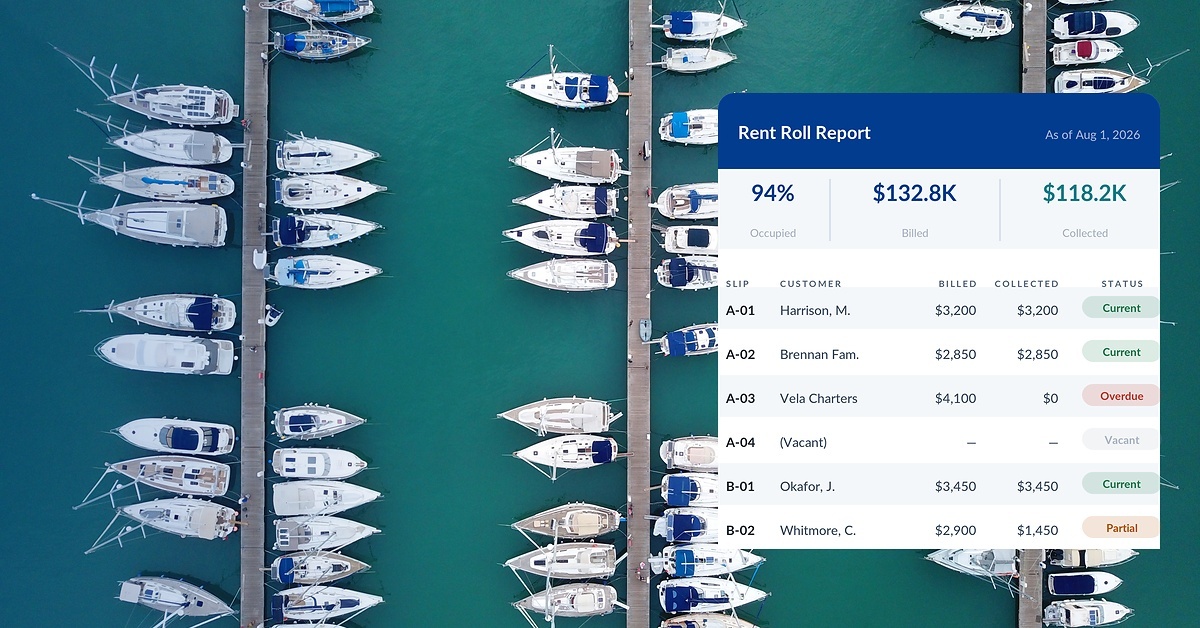
The term comes from commercial real estate. A rent roll is a point-in-time report of all leasable units — in a marina's case, slips, moorings, and storage — showing what's contracted, what's occupied, what's been collected, and what's outstanding.
At its core it answers three questions: What did we contract? What did we collect? Where do we stand?
For an ownership group or investor, a rent roll is a primary tool for understanding the financial health of the asset. It's what they look at when evaluating occupancy trends, renewal risk, delinquency exposure, and how the marina is tracking against its revenue projections.
Who asks for rent rolls — and what they're actually looking for
The ask usually comes from one of a few places: an investment group that owns the marina outright, a family ownership structure with multiple stakeholders who aren't on-site day to day, or a lender or management company that needs regular performance reporting.
What they're looking for varies by audience, but a few things show up consistently. Contracted revenue versus collected revenue. Occupancy by slip type or category. Outstanding balances and how long they've been aging. Upcoming renewals and expirations. And increasingly, year-over-year comparisons that give context to the current numbers.
The more sophisticated the ownership group, the more specific the ask tends to be. Multi-property owners often want to see performance across their portfolio in a comparable format. That's where inconsistent reporting from property to property becomes its own problem.
Why producing one is harder than it should be
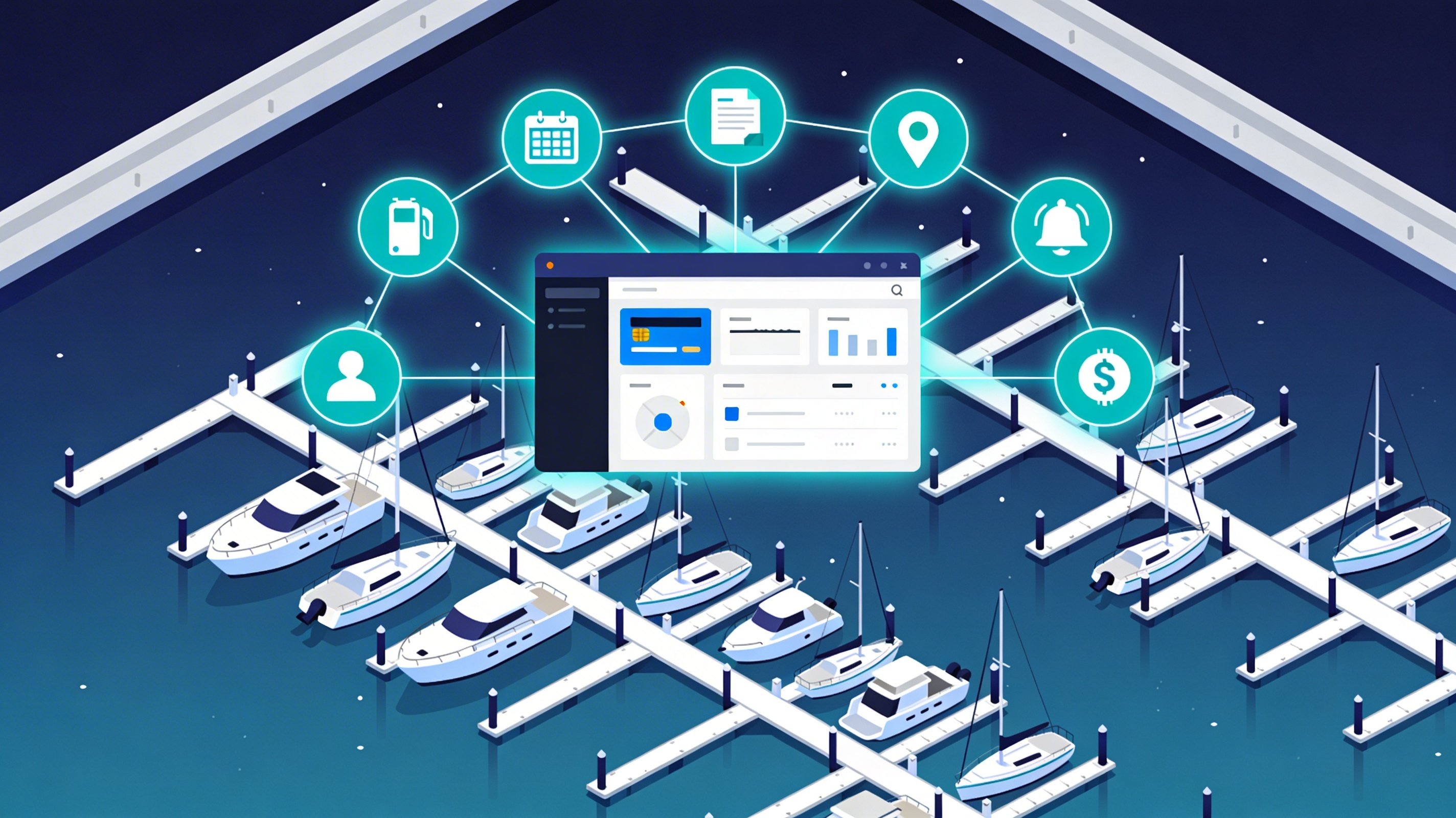
Marina management has historically been distributed across systems. Contracts in one place. Billing in another. Occupancy tracked on a whiteboard or in a spreadsheet that lives on one person's computer. When someone needs to produce a rent roll, they're not running a report. They're assembling one.
The result is a document that reflects the state of things at the moment it was built, which may or may not be the moment ownership reads it. It's also built differently each time, which makes month-over-month comparisons unreliable. And it takes long enough to produce that it happens less often than it should.
This isn't an operational failure, rather a data structure problem. The information exists; it just doesn't live anywhere that makes the report easy to generate.
What changes when it's built into your system
Rent Roll in Dockwa is the version of this report that lives alongside your operational data. Pick an as-of date, run the report, and every slip shows up: occupied and vacant. Vacant slips represent vacancy loss, and until now they were largely invisible in most reporting setups.
The report also goes a level deeper than occupied versus unoccupied. A 30-foot slip holding a 17-foot boat shows up as occupied but underused, which is a meaningful distinction for an ownership group thinking about how their asset is actually being utilized. Contract type and dates, billed versus collected, balance due, and insurance status are all included in the export.
For operators, it's one click instead of a monthly assembly project. For ownership groups, the data is available when they want it, reflecting what's actually current. And when both sides are working from the same numbers, the conversation about performance gets a lot more straightforward.
Find it in your Dockwa dashboard under Reports > Rent Roll Report.
Pro Tip: To get the most out of your new rent roll report, make sure your slip dimensions and expected monthly revenue are configured in Spaces settings.
Why it's worth running even when nobody's asking
Most GMs produce a rent roll because ownership requested one. But the report is useful independently of that.
Running it for yourself, even monthly, gives you a cleaner picture of how your marina is actually performing: which slips are producing, which are sitting empty or underused, where balances are aging, and what your occupancy looks like on any given date.
Not on Dockwa? We'd love to show you around. Book 15 minutes with an expert →