3 min read

Why Tipping at a Marina Isn't Like Tipping Anywhere Else

Why Tipping at a Marina Isn't Like Tipping Anywhere Else
Marina Tipping: A Guide to Card-Reader Tip Presets | Dockwa
4:46

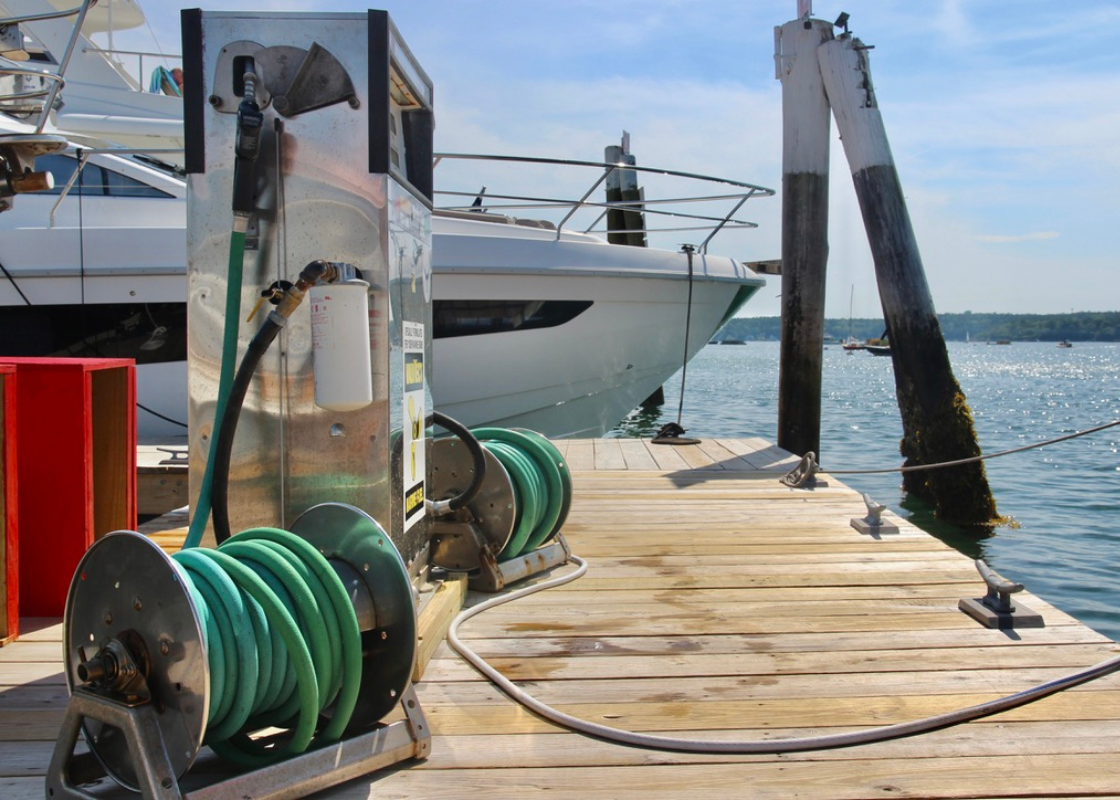
Picture a boater at the fuel dock on a Saturday in July. They've just taken on several thousand dollars of fuel. The dockhand handled the lines, managed the pump, and kept the whole thing moving in a crosswind. Then the card reader lights up and suggests a tip of five dollars. The boater, on autopilot from every coffee shop and lunch counter they've ever tapped through, takes the default. The dockhand who did real work just got tipped like a barista — and nobody in that transaction paused to think about it.

That small moment repeats itself thousands of times a season across marinas, and it points to something worth saying out loud: tipping at a marina isn't like tipping anywhere else. The tools most marinas use to collect tips were built for restaurants and retail, where tickets are small and fairly consistent. Docks don't work that way — and the mismatch quietly costs staff real money.

Marina sales don't behave like restaurant checks

At a restaurant, the range of check sizes is narrow. Most tables land within a predictable band, so a flat set of suggested tips — or a simple percentage — does a reasonable job. A marina's transactions swing across an enormous range. A pump-out might be forty dollars. A fuel fill can run into the thousands. A seasonal contract or a haul-out is a different scale entirely, and the ship's store sells everything from a candy bar to a chartplotter.

A single suggested-tip setting simply can't serve that whole range. Anchor the prompt low and you leave money on the table on big sales. Anchor it high and you'll feel absurd on a small one. The default has to bend to the sale — and until recently, at most marinas, it couldn't.

The hidden cost of a default that never changes

There's a well-documented behavior behind all this: people anchor to whatever number they're shown. When the reader suggests a small fixed amount, that number becomes the mental starting point — even on a sale where it's wildly out of proportion. Faced with a low default and a “Custom” button that takes an extra step, most boaters just tap the default and move on.

The result is a quiet, invisible tax on the people doing the most physical work in the business. Dockhands and fuel attendants are often among the lowest-paid staff at a marina, and they're frequently seasonal, which makes hiring and holding onto good people harder every year. Gratuity that reflects the actual work is one of the few levers a marina has to make those jobs more competitive. A tip prompt frozen at retail defaults works directly against that.

Flat, percentage, or a bit of both?

There's no single right answer — it depends on what a marina sells. It helps to think about three approaches:

Fixed amounts work when your ticket sizes are consistent and modest — a small store, a café, a launch service. Everyone understands a dollar figure instantly, and it's easy to keep reasonable.

Percentages shine when sales are large and variable. A percentage scales automatically, so the suggestion stays proportional whether the sale is big or small — which is exactly why higher-ticket venues like fuel docks tend to prefer them.

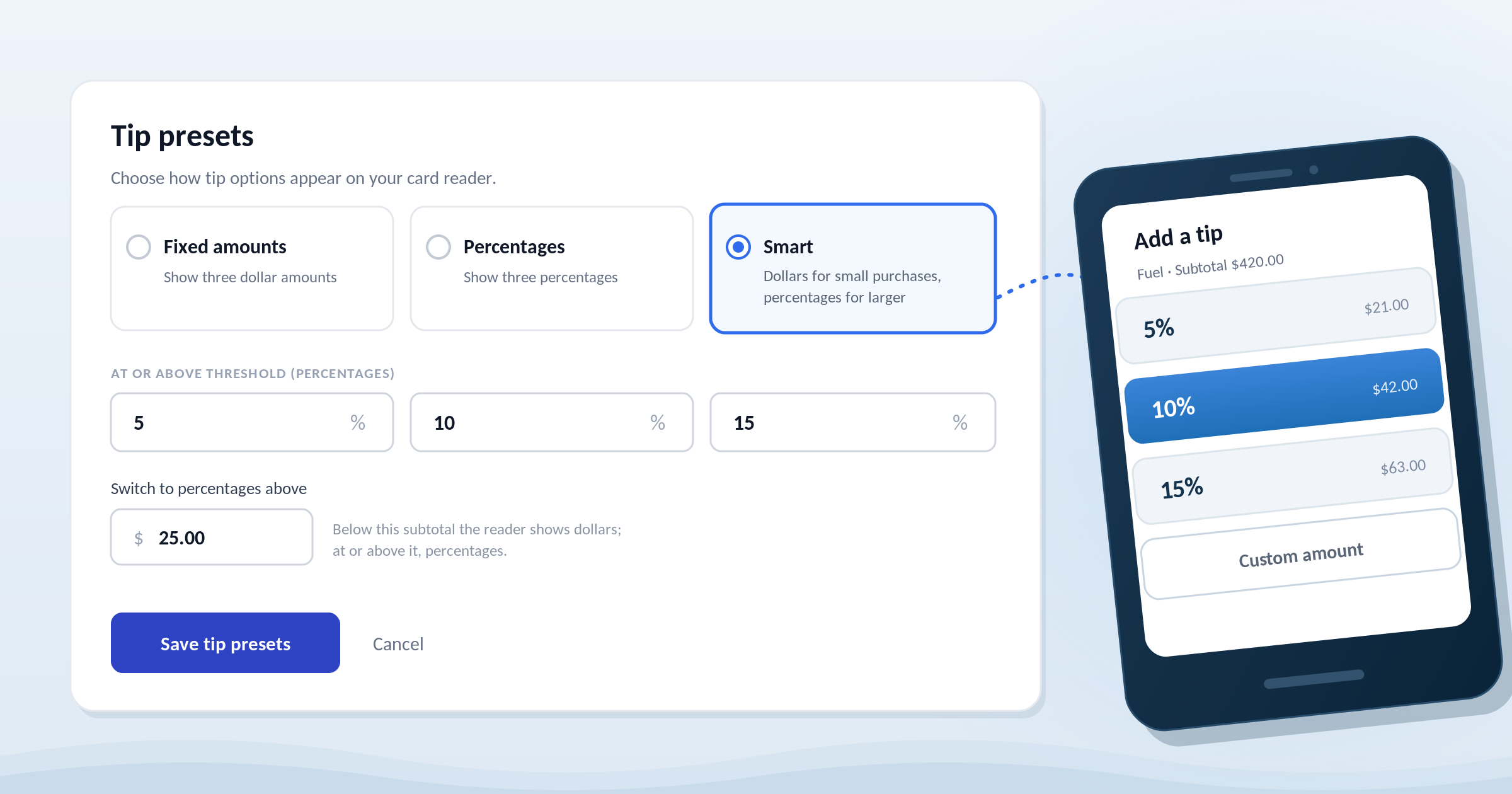
A hybrid splits the difference: show clean dollar amounts on smaller sales, then switch to percentages once a transaction crosses a threshold. It keeps the prompt sensible at both ends — no absurd percentage on a soda, no trivial flat tip on a four-figure fill-up.

The right choice is the one that matches how your marina actually sells — and, ideally, a system flexible enough to let you pick.

What good looks like

A well-designed tip experience does three things. It stays proportional to the sale, so the suggestion never feels random. It's quick for the boater, because presets that fit the sale let most people tap once and go — with a custom amount always there for anyone who wants it.

And it's set by the marina, not hardcoded by a vendor who's never worked a fuel dock in a July crosswind. Get those right and tips stop being an afterthought — they become a fair, predictable part of what your team earns.

How Dockwa handles it

This is exactly why we made tip presets configurable in Dockwa. Marinas can now set their own card-reader tip options — fixed amounts, percentages, or the smart hybrid — right from Hardware settings, and change them anytime. It's a small setting with an outsized effect on what your crew takes home over a season. A Dockwa marina partner recently saw their tip average more than double in the first five days of switching to smart tips. If you're already on Dockwa POS, follow these steps to get started in minutes:

Go to Settings → Hardware → Tip Settings and pick one of three modes:
  1. Fixed amounts: three dollar values you choose (cents are fine, like $5.50).
  2. Percentages: better for high-ticket sales, where a flat number always looks small.
  3. Smart: fixed dollars on small sales, then percentages once a sale crosses a threshold you set.

If you're not already using Dockwa POS and you'd like a point of sale that actually understands how marinas sell — we'd love to show you around. Book a demo →


Not on Dockwa? See What You're Missing

From Clipboard to Command Center: Why Marinas Are Digitizing Slip Contracts

1 min read

From Clipboard to Command Center: Why Marinas Are Digitizing Slip Contracts

How moving your long-term agreements onto one system protects your revenue, your season, and your staff's sanity.

Read More
High Prices at the Pump, Boats on the Water: How Smart Operators Are Working Their Fuel Docks

1 min read

High Prices at the Pump, Boats on the Water: How Smart Operators Are Working Their Fuel Docks

Fuel is expensive right now. That's not a secret to anyone running a marina fuel dock in 2026. But here's the flip side: 85 million Americans go...

Read More
The Data Behind the Investment: What We're Seeing in the Market — And What It Means for Your Marina

1 min read

The Data Behind the Investment: What We're Seeing in the Market — And What It Means for Your Marina

When Dockwa recently announced a partnership with PSG, the story wasn't really about the investment itself. It was about what the investment reflects.

Read More