1 min read
4 min read
6 Preventable Storm Prep Mistakes Marinas Make Every Year
Erin Sayer
:
Updated on August 27, 2026
Peak hurricane season runs August through October. If you're on the Atlantic or Gulf coast, you already know this, and you probably have some version of a storm plan. But a plan on paper and an operation that actually holds together when a storm is 48 hours out are two different things.
The marinas that handle storm season well aren't necessarily the largest or the best-resourced. They're the ones that were already organized. Preparation doesn't prevent storms, but it determines how your marina weathers them.
Here are six of the most common ways things go wrong, and what to have in place before the season peaks.
1. No fast way of reaching everyone at once
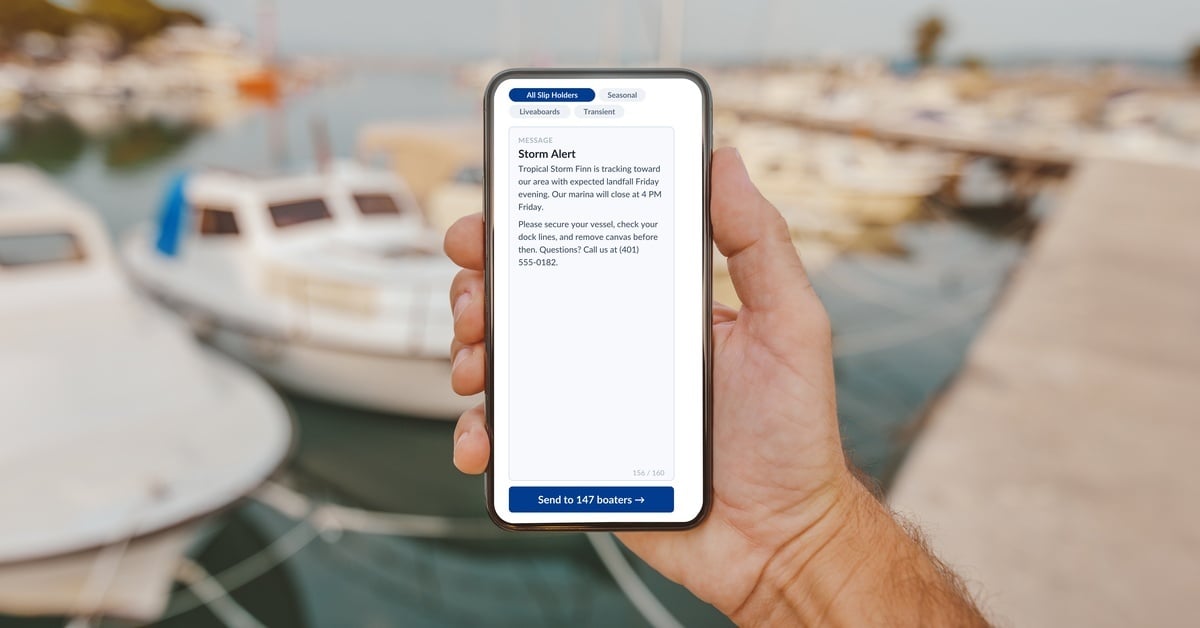
This is the one that costs the most time when it matters most. A storm is tracking toward your area. You need to tell seasonal slip holders what to do with their boats, notify liveaboards about your closure policy, and update transient guests about availability, all before conditions deteriorate. If your answer to "how do we reach everyone" is a combination of phone calls, individual texts, and hoping staff remembers who to contact, you're already behind.
Bulk messaging changes this. From the Tonight's Boats view in Dockwa, you can select customers using the available filters and send a single message to everyone who needs it: weather alert, policy reminder, closure notice, fuel status update. The message goes out in one action, and everyone gets the same information at the same time.
This is the communication infrastructure that makes everything else manageable. Set it up before you need it.
2. Contact information is out of date
At the start of a season, most marinas have reasonably clean data. By August, it's another story. Boaters change phone numbers. Seasonal slip holders update their boats but not their profiles.
A storm is a bad time to discover that a third of your outbound messages aren't landing.
Before peak season, run a quick audit: are the mobile numbers on file actually mobile numbers? Do you have an emergency contact (not just the primary boater) for liveaboards and long-term slip holders? Is your contract data current enough that you know who's in which slip on any given day?
This isn't glamorous work. But it's the kind of thing that separates a smooth storm response from a chaotic one.
3. Boaters don't know what to expect
When a storm is approaching, customers have questions: Are you closing? When? What should they do with their boat? Will they owe anything if they have to leave early? What happens to their reservation?
If you don't have clear answers to these questions, written down and communicated before the storm arrives, you will answer them individually, in real time, while also managing the physical demands of storm prep. That's a rough place to be.
The best time to set boater expectations is before anyone is worried. Your storm and closure policy should be documented, reviewed at the start of each season, and easy to share. When a storm is 72 hours out, you should be able to push that policy to your slip holders in a single bulk message, not drafting it from scratch while the wind picks up.
A few things worth having documented: your closure criteria and timeline, what's expected of boaters (line checks, securing gear, removing canvas), your policy on credits or extensions for weather-related disruptions, and how to get in contact with you.
4. Physical prep is inconsistent across the team
Most experienced dock staff know what storm prep looks like. The problem is that "what they know" isn't always the same thing, and in a seasonal operation, the staff doing storm prep in August may not be the same people who did it last October.
A written prep checklist does two things: it makes sure nothing gets skipped, and it gives you something to train against at the start of the season rather than the middle of a weather event.
Your checklist doesn't need to be over-engineered. High-level is fine: secure or remove dock boxes and loose equipment, check and add additional dock lines on exposed slips, confirm fuel dock status and pump positions, walk the yard for anything that can become a projectile. The goal is a consistent standard your whole team executes the same way, every time. Download our Marina Storm Readiness Checklist as a starting point.
This is also the document to share with dock staff directly, not as a crisis communication but as a training reference they've seen before the season peaks.
5. Billing and contracts fall through the cracks
Storm disruptions create billing edge cases that most marinas handle reactively: a transient guest who had to leave early, a seasonal slip holder whose boat was moved, a contract that spans a closure period. When these situations aren't handled clearly and quickly, they generate disputes, refund requests, and awkward conversations at exactly the moment your team has the least capacity to deal with them.
A few things help here. Having your contract terms written clearly (including your weather and closure policy) means you're not making judgment calls under pressure. Knowing who has outstanding balances before a storm hits means you're not chasing payments in the aftermath. And having a single place where your contract and billing data lives, rather than across spreadsheets and email threads, means your team can answer ownership's questions without a data excavation.
6. Recovery takes longer than it should
The storm passed. Now what?
For many marinas, the post-storm period is where the real operational strain sets in. Damage needs to be documented. Boaters need to know when the marina is open and what the conditions are. Your staff are exhausted, and the phone keeps ringing.
Two things shorten recovery meaningfully. The first is documentation: a simple process for photographing and logging any damage during or immediately after the storm, before anyone starts cleanup. This protects you in insurance conversations and gives ownership a clear picture. The second is communication: as soon as you have reliable information, get a bulk message out to your slip holders with status, a reopening timeline, and what to expect when they return. Don't wait until everything is perfect. A "here's what we know right now" message does more for boater confidence than silence followed by a complete update two days later.
The common thread
Communication. Every item on this list either causes a communication failure or is solved by having better communication infrastructure in place before the storm arrives.
That's what makes bulk messaging the most operationally valuable thing a marina can get familiar with before peak season. It doesn't replace a good storm plan, but it's what makes a good storm plan executable when things are moving fast and the margin for error is thin.
Get the Storm Readiness Checklist →
Not on Dockwa? We'd love to show you around. Book 15 minutes with an expert →
1 min read
Marina Payment Processing in 2026: A Complete Guide
Running a marina means managing payments across multiple revenue streams at once. Slip fees, fuel sales, service tickets, and ship store purchases...
1 min read
Dynamic Pricing for Marinas: The Revenue Your Peak Season Is Already Generating
Picture Fourth of July weekend. Your dock is full. There’s a waitlist. Boats are circling. Every slip is spoken for, and you’ve got three phone calls...