
.png?width=300&height=100&name=The%20Galley%20Club%20(9).png "The Galley Club")
Seafood Foil Packets
There's a certain magic to tearing open a foil packet at the table. A cloud of steam, the smell of butter and lemon and garlic, and underneath it a whole dinner that cooked itself while you weren't looking. No pan to scrub, no plate to plate, no fuss. For a small galley with limited gear and even more limited patience for dishes, the foil packet might be the most useful trick there is.
Here's the one we made, and more importantly, how to make a hundred versions of it with whatever you've got.
A good fish, and where we got it
We built ours around haddock from Browne Trading Company, the Portland seafood market that's been supplying the best restaurants in the country from the city's working waterfront since 1991. It was Gulf of Maine haddock, landed by a local boat in the waters right around where we were docked. We didn't catch it ourselves, and that's fine. Good provisioning is knowing where to buy the fresh local thing, and a foil packet is the perfect showcase for it, because the method is so gentle and so simple that nothing gets in the way of the fish. A beautiful piece of seafood, a little butter, some steam. That's the whole idea.
It's a formula, not a recipe
Here's the honest truth about foil packets: the exact ingredients barely matter. This is a method more than a recipe, and once you understand the shape of it, you can build one out of almost anything.
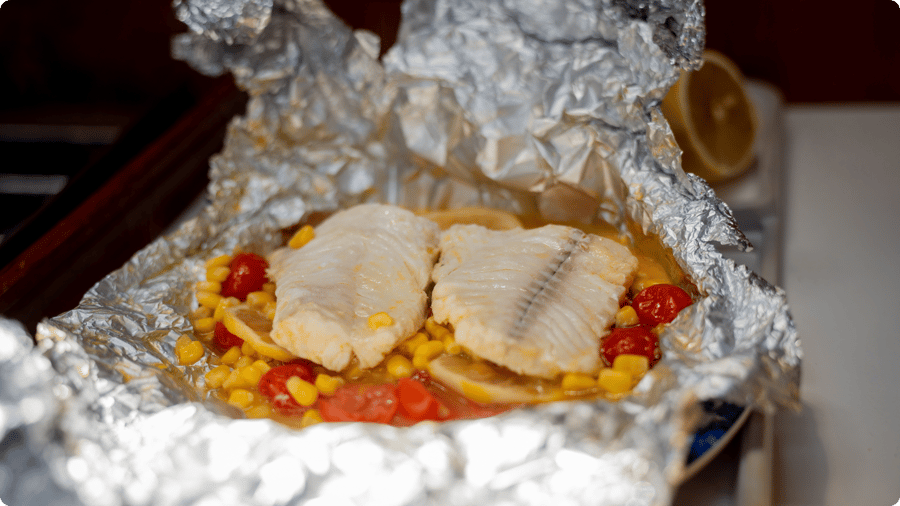
The formula is simple: a protein, some quick-cooking vegetables, a little fat, a hit of acid, and a few aromatics, all sealed up so they steam together. The fish gives you dinner, the vegetables cook in the same steam, the butter and lemon become a built-in sauce, and the garlic and herbs perfume the whole thing. As long as the pieces cook in roughly the same amount of time and taste good together, the packet works. That's it.
The Recipe: Seafood Foil Packets (our version)
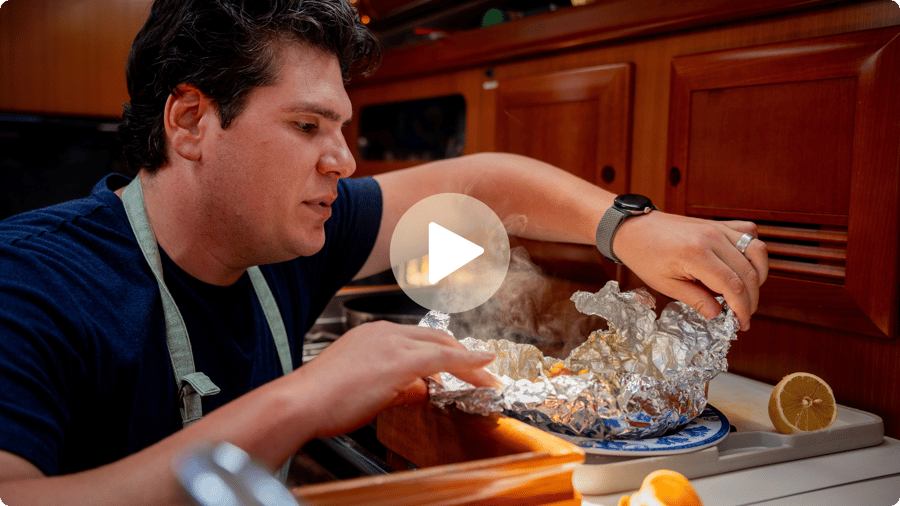 Watch the video - live on Instagram!
Serves 2 | About 20 minutes | Oven, pan, or grill
Treat this as a template, not a rulebook. Swap freely, see below.
Ingredients:
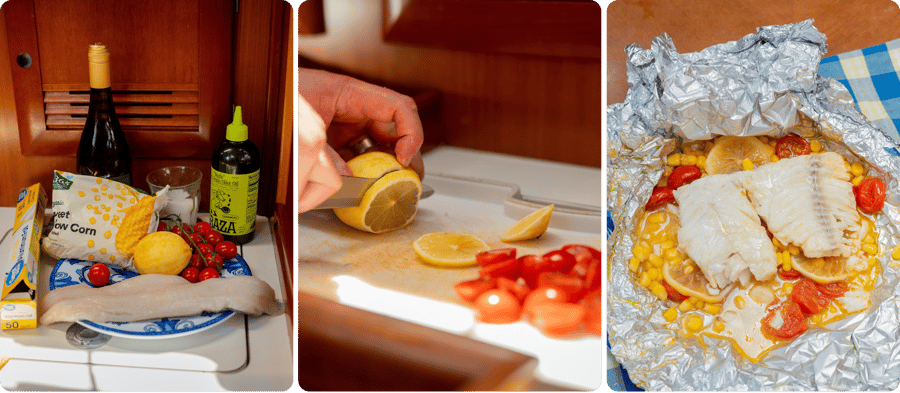
- 10 oz firm white fish (haddock, cod) or peeled shrimp, or a mix
- 1 ear of corn, kernels cut off (or 1 cup frozen or canned)
- 1 cup cherry tomatoes, halved
- 2 cloves garlic, sliced
- 2 tablespoons butter
- 1 tablespoon olive oil
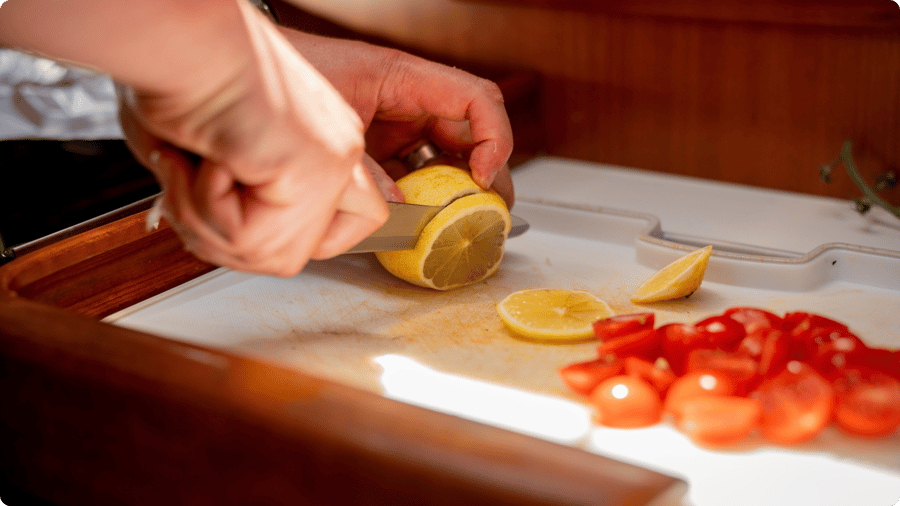
- 1/2 lemon, sliced
- 1 teaspoon salt, a pinch of chili flakes
- A small handful of parsley or dill, to finish (optional)
- Heavy-duty foil
How to make it:
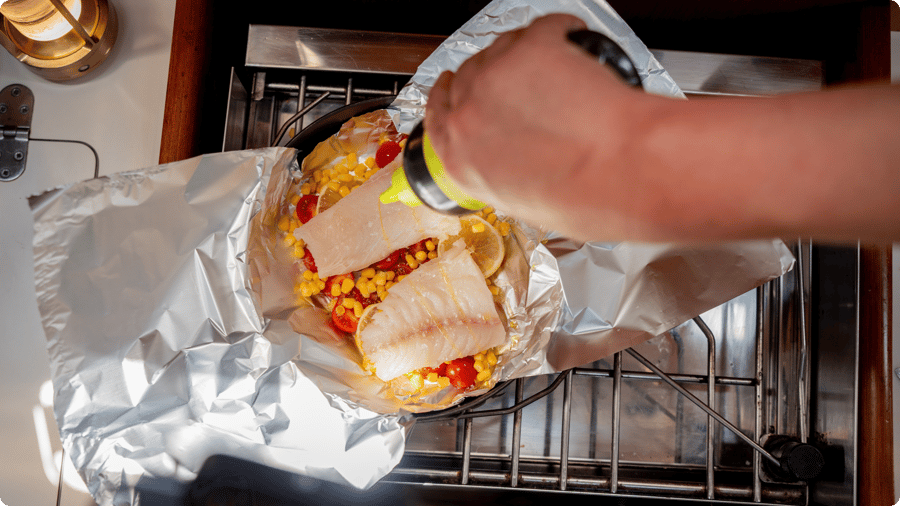
- Lay out a large double layer of foil. Pile the corn and tomatoes in the center, drizzle with the olive oil, and season.
- Nestle the fish or shrimp on top. Scatter over the garlic, tuck in the lemon slices, add the chili flakes, and dot everything with the butter.
- Fold the foil into a sealed packet, leaving a little room inside for steam to circulate. Cook (see the three ways below). The packet will puff up as it works.
- Let it rest a couple of minutes, then tear it open. Squeeze over a little more lemon and finish with the herbs, if using.
Why the key steps matter: the butter and the moisture from the tomatoes create steam inside the sealed pouch, which cooks the fish gently and keeps it moist instead of drying it out. Leaving a little air in the packet gives that steam room to move. And the lemon is the activator here, cutting through the butter and waking the whole thing up right at the end.
Cook it however you've got heat
This is the packet's best trick: it works over any heat source, so you cook it with whatever your setup gives you.
- Oven (what we did): bake at around 220°C / 425°F for 12 to 15 minutes.
- Stovetop: set the sealed packet in a dry, lidded pan over medium heat for 12 to 14 minutes. The trapped steam does the work, no grill required.
- Grill: lay it right on the grates over medium-high for 10 to 12 minutes.
You're done when the packet is puffed and the fish flakes easily. Shrimp will be pink and curled.
Take the elevator: A splash of white wine added to the packet before you seal it turns the buttery steam into something closer to a real pan sauce, and it smells incredible when you open it up. Don't skip resting the packet for a minute or two after it comes off the heat, either; it lets everything settle and keeps you from scalding yourself in the steam.
Make it your own: Build your own packet!
This is where the fun is. Mix and match, just keep the cook times in the same neighborhood:
- Protein: any firm white fish, salmon, shrimp, scallops, or even mussels and clams (which pop open right in the packet).
- Vegetables: corn, cherry tomatoes, zucchini, thin-sliced fennel, asparagus, or baby potatoes (par-cook the potatoes first, since they're denser).
- Fat: butter or olive oil, always.
- Acid: lemon or a splash of wine, non-negotiable.
- Aromatics: garlic, shallot, chili flakes, and whatever soft herbs you have.
Two rules only: cut everything to a similar size so it cooks evenly, and don't overstuff the packet, or the steam can't move. Beyond that, raid the cooler and build what sounds good.
Pack it for the boat:
Galley Hack: the packet is the pan, the plate, and the cleanup crew all in one. Nothing to scrub afterward, which is a genuine gift when fresh water is rationed. Build one packet per person and everyone gets their own tidy little dinner.
Boat Life Note: you can build these at home, fold them up, and stash them flat in the cooler, ready to hit the heat the moment you're hungry. It's prep-at-home, finish-aboard at its easiest. Perfect for a marina weekend when you'd rather be swimming than cooking.
Pair with: a crisp coastal white
Buttery, briny seafood wants a wine with citrus and salinity to match. Theresa's pick is a cold Muscadet or Vermentino, lean, mineral whites that taste like the coast and cut right through the richness. It's the kind of bottle that packed a lime wedge and a pair of linen pants. Serve it cold and pour it the moment the steam clears.
The point of all this
The foil packet isn't really a recipe. It's a way of cooking that turns one good ingredient, a little butter, and whatever heat you've got into a genuine dinner with nothing to wash. Buy the freshest fish you can find wherever you're docked, build your packet around it, and let the steam do the rest.
What would you fold into yours? Tell us how you'd build your packet!
Cheers,
Max and Theresa